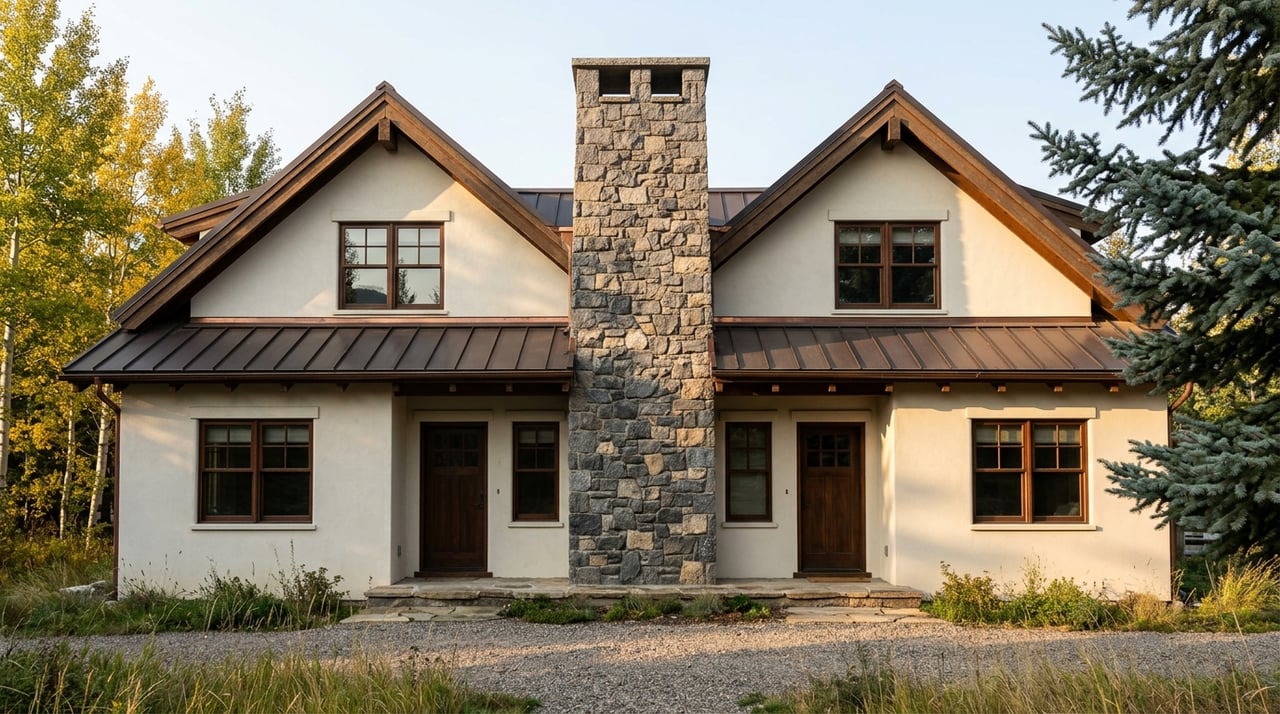
Eagle-Vail Skips the Transfer Tax. It Doesn't Skip the Paperwork.
August 27, 2026
August 27, 2026
Spread across a closing table in Eagle-Vail, the documents rarely match. There's a resale package from one association, an assessment letter that may or may not exist yet from a district most buyers have never heard of, and if the property is a duplex, a recorded agreement about a shared wall that neither the buyer nor the seller has actually read. Nobody has yet noticed that the closing is running two weeks late because of a document nobody knew to order.
That's the real story of buying or selling in Eagle-Vail. The absence of a transfer tax gets repeated in listing after listing, and it's true as far as it goes. What actually governs this community is two separate boards with two separate sets of paperwork, and for the duplexes and townhomes that make up a large share of the inventory, a private contract that, according to Vail PLLC, runs with the land regardless of what either board says.
Eagle-Vail is unincorporated, which means zoning and building decisions are made at the county level rather than by a town hall. Two two entities split the work of running the place, and their responsibilities were once shared.
A Vail Daily report says the Eagle-Vail Metropolitan District and the Eagle-Vail Property Owners Association operated under a joint governance arrangement from 2010 to 2017 and separated in January 2018. According to the district manager at the time, the Metro District is governed by state statute and owns and manages the community's physical assets: the golf course, the pool, the roads, the infrastructure. It funds that work through property tax and a voter-approved sales tax. The Property Owners Association, meanwhile, is a homeowners association responsible for covenant enforcement and design review across roughly 1,447 member properties. After the split, the POA hired an outside firm to handle code enforcement and design review rather than sharing staff with the district. The two boards still coordinate loosely on things like wildlife and wildfire mitigation, but they run their own budgets, their own elections, and their own paperwork.
That split shows up at closing in a specific way. A buyer's lender or title company asking for "the HOA documents" may get the POA's resale package and nothing from the Metro District, because the district isn't a homeowners association in the conventional sense and doesn't always sit in the same request queue. A seller who assumes one document covers both bodies can find out at the worst possible moment that it doesn't.
The two boards that run Eagle-Vail don't share a filing cabinet. A buyer's lender asking for "the HOA package" may only get half the picture.
The Property Owners Association's resale disclosure package is ordered through Community Archives, and the association's own governing documents page is explicit that sellers must still provide this package to buyers regardless of how routine the sale feels. That package typically answers the questions a title company needs before closing: is the seller current on dues, are there pending violations, is there litigation, what are the covenant restrictions on the specific lot.
What it does not automatically answer is anything about the Metro District's side of the ledger. The district funds and maintains the golf course, the pool, and the roads through property tax revenue and a 1 percent sales tax that Eagle-Vail voters approved. If there's a capital project underway, a rate change, or an assessment tied to district infrastructure, that information doesn't live in the POA's Community Archives order. It has to be requested separately, and in a transaction on a tight timeline, "separately" is exactly the kind of detail that gets missed until a lender flags it during underwriting.
| Entity | What it governs | Funded by | What a seller needs to request |
|---|---|---|---|
| Eagle-Vail Metropolitan District | Golf course, pool, roads, infrastructure | Property tax and voter-approved sales tax | Assessment and capital project status directly from the district |
| Eagle-Vail Property Owners Association | Covenant enforcement, design review, ~1,447 member properties | Annual dues | Resale disclosure package through Community Archives |
Neither document is complicated on its own. The friction comes from treating them as one document when they're two.
Eagle-Vail's housing stock leans heavily on duplexes and townhomes, and attached product carries a piece of paperwork that condos and single-family homes don't: a party wall agreement. In Colorado, these agreements are recorded by the original builder before either half of the duplex ever sells, and they're treated as covenants that run with the land, meaning every subsequent owner inherits the same rights and obligations whether they've seen the document or not.
A Vail Daily real estate law column laid out the scenario plainly: if the plumbing running through a shared wall bursts in a cold snap, the agreement is what determines who pays, who has access, and how a refusal gets resolved. Without it, two neighbors are left negotiating from scratch during a plumbing emergency.
Most duplex owners in Eagle-Vail have never pulled this document. It was recorded decades ago, it isn't part of the POA's covenant package, and it isn't something a listing agent routinely surfaces unless asked. For a seller, that can complicate the sale if a buyer's attorney asks for it during due diligence and it takes days to locate at the county. For a buyer, locating the document before a repair issue arises can help make the paperwork clearer.
Paperwork friction costs more in some segments of the market than others, and the segment where duplexes and townhomes live has been the more price-sensitive one across the Vail Valley. Vail Board of Realtors figures reported in the spring of 2025, comparing April 2024 to April 2025, showed single-family days on market across the valley rising from 107 to 134, while townhome and condo days on market rose from 60 to 79 over the same window. Single-family median sale prices jumped more than 33 percent in that same April comparison, while townhome and condo medians declined nearly 14 percent over the same January-through-April period.
That gap matters for a duplex owner in Eagle-Vail specifically, since duplexes and townhomes sit in the segment that was already pricing softer valley-wide. A closing delayed by a missing Metro District letter or a scramble to locate a decades-old party wall agreement isn't just an inconvenience here. It's lost leverage in a segment where buyers already have more room to be selective.
None of these steps is difficult in isolation. Skipping any one of them is how a closing that should take thirty days takes forty five.
Does every duplex in Eagle-Vail have a party wall agreement? Most do, since these are typically recorded by the builder at the time of original construction and attach to the property regardless of ownership changes. The safest step is to confirm the recorded document exists rather than assume it does or doesn't.
Is the POA resale package the same thing my title company will use at closing? It's one piece of what a title company needs, but it doesn't include Metro District assessment information. Both should be requested and reviewed before the closing date is set.
Who do I contact for Metro District information if I'm selling? The district handles its own records separately from the Property Owners Association. A seller or their agent should reach out to the district directly rather than assuming the POA's package covers it.
Doing homework early can help buyers and sellers in Eagle-Vail prepare for the paperwork. If you're weighing a purchase or a sale here and want a clear read on what a specific property's paperwork actually looks like, Kevin Kuebert can walk through it with you before it becomes a closing-week surprise. Let's Connect.
This article is general information, not legal, tax or financial advice. Consult a qualified professional about your situation.
Stay up to date on the latest real estate trends.





Partner with Kevin for expert guidance in buying or selling real estate in the Vail Valley. His experience and integrity ensure a smooth and successful process. Contact Kevin to start your real estate journey!